Beautiful stuff. What else can I say? Kind of embarrassing to have my own drawings so near these gorgeous ones in my blog. I should have put some blank posts in between to separate them more!

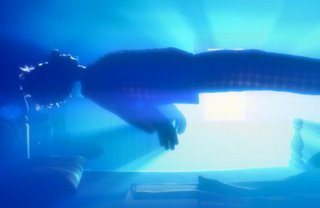
On a few of the pages you mention that you used other movies for inspiration, like the shining. I thought that was very interesting and its an approach I haven't tried before. How do you make a scene, that is from another movie, relate to your scene, and what do you look for in those scenes? It would be very helpful to hear how you plan your scenes by using material from other movies.This is a good question. Let me start by saying that I'm not looking to steal someone else's performance for my scenes. Rather, I'm looking for ideas that I wouldn't have thought of on my own. I can only go so far on my imagination; pretty soon my characters will all start to move and behave like me! Therefore I find it important to look outside myself for inspiration and reference, be it in other films or in real life. When doing research for a character I try to find live actors who resemble the character somehow, in personality and/or physiology. In the case of Syndrome, Brad Bird had suggested several actors, including Jack Nicholson. Nicholson's performance in The Shining is over-the-top, perhaps even cartoony, so I thought I might find some interesting ideas in there. I was looking for poses, facial expressions, gestures, bits of timing, anything I could find to make Syndrome more creepy and threatening (and a jerk). For the scene where Syndrome says "I'll give them heroics; I'll give them the most spectacular heroics anyone's ever seen!" I drew inspiration and reference from The Shining, Paul Gleason in The Breakfast Club, Ratigan in The Great Mouse Detective, and of course, my own imagination.
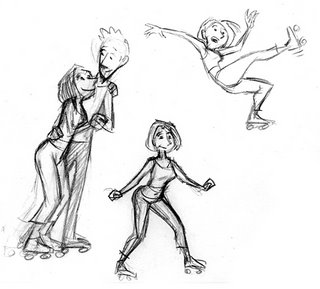
Maybe this is too in depth, but how do you decide how far to take a thumbnail? I mean, many times I have very loose thumbnails, and i wonder if it is better making them more refined. Like, even the stick figures have all of the motion etc defined and of the correct proportions for the character.The purpose of a thumbnail is just to communicate the important facts about a pose. For instance, the angle of the hips and shoulders, the curve of the spine, the placement of the feet, etc. Some rudimentary facial expressions may also be in order, depending on the shot. As long as you can clearly communicate these things to yourself (and anyone you may need to show them to) that is far enough. I think it's also important to convey the basic proportions of the character you're animating, otherwise you may draw poses that the model can't really achieve. That said, as someone who likes to draw I often find myself embellishing my thumbs with more detail than they need, just because I enjoy the process!
Once you get your boards, how close must you follow them when planning and thumbnailing?It depends on the story boards. Sometimes they're very specific and indicate exactly what the director wants, so I try to match them as best I can. Other times the boards are loose and just suggest the main beats of the shot, so I try to make it my own. The director and I will discuss the scene before I begin planning, and he'll let me know what he expects and how closely I need to follow the boards.
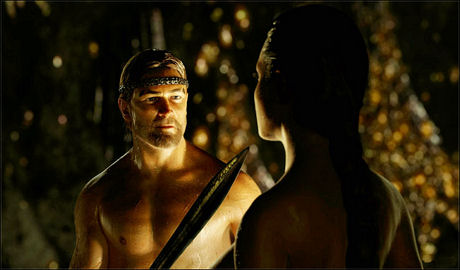
The creators of "Beowulf" don't call it animation, nor do they intend to replicate real life."It's a new art form that is performance-based," producer Steve Starkey said, echoing comments Zemeckis made about his 2004 effort, "The Polar Express" (a performance-capture movie that had many traditional animators shuddering for its characters' lifeless eyes and stilted movements.)
"If one were to call it traditional animation, I think it would be a disservice to the brilliant animators of the like that worked on 'Roger Rabbit,' that brought those characters to life. I also think it would be a disservice to the performers like Ray Winstone, whose performance lives on-screen."


 Check out the latest highlights of the work being done by students at AnimationMentor.com. I'm teaching there again this semester and I'm always amazed at the talent they attract.
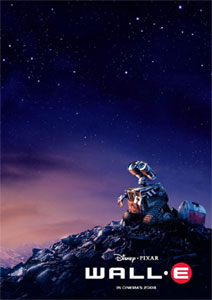

 There, 7,000 lucky guests were treated to glimpses of preproduction art, animation tests and a synopsis of the film by director Andrew Stanton. They also got to see a sound demo by Star Wars veteran Ben Burtt, and about 7 minutes of footage from the film! Here are some reviews of the event: